beoranged GmbH — Information technology
Software and infrastructure built to stay maintainable.
We design, build and maintain the systems organisations depend on: custom applications, cloud environments and the integrations that hold them together. The work is engineered for the years after launch, not only for the release date.
- Discipline
- Software engineering
- Focus
- Long-lived systems
- Language
- English
- Contact
- myrapierce1989@gmail.com
Who we are
An engineering company, first
beoranged GmbH works on software that has to keep running: internal platforms, customer facing applications, and the infrastructure underneath them. Our starting point is always the system that already exists — its constraints, its data, and the people who operate it every day.
We prefer clear interfaces over clever abstractions, written decisions over informal agreements, and small releases over long silent periods. That approach makes technical work easier to review, easier to hand over and less expensive to change later.
Core capabilities
Four areas of engineering work
- 01
Application engineering
Backend services, web applications and internal tools written to be read, tested and changed by other engineers.
- 02
Cloud and infrastructure
Environments defined as code, reproducible deployments and observability that makes production behaviour visible.
- 03
System integration
APIs and data flows that connect existing systems without forcing an organisation to replace what already works.
- 04
Architecture and consulting
Technical reviews, migration planning and design decisions documented so they can be revisited later with context.

Inside the work
Ordinary days decide the outcome
Most of the value in a software system is created in unremarkable moments: a review comment that catches an edge case, a migration rehearsed before it runs in production, a log line that later explains an incident in seconds.
We build the habits that make those moments routine — version control discipline, reproducible environments, and documentation kept close to the code it describes.
Services overview
What we are asked to do most often
The Services page describes each of these in detail, including how the work is scoped and what is delivered alongside the code.
- Custom software development
- Web application development
- Cloud and infrastructure solutions
- System architecture
- API development and integration
- UI/UX implementation
- Software modernisation
- Quality assurance
- Security-focused engineering
- Technical consulting
- Maintenance and optimisation
- Observability and support
Delivery approach
Small increments, visible progress
Scope written down
Each piece of work starts with a description of the behaviour it should produce and the conditions under which it is considered complete.
Reviewable increments
Changes are delivered in units small enough to be read, tested and rolled back individually.
Environments that match
Staging mirrors production configuration closely enough that testing there means something.
Handover by default
Documentation, access and operational notes are produced during the work, not assembled at the end of it.
Technology and infrastructure
Platforms described as code
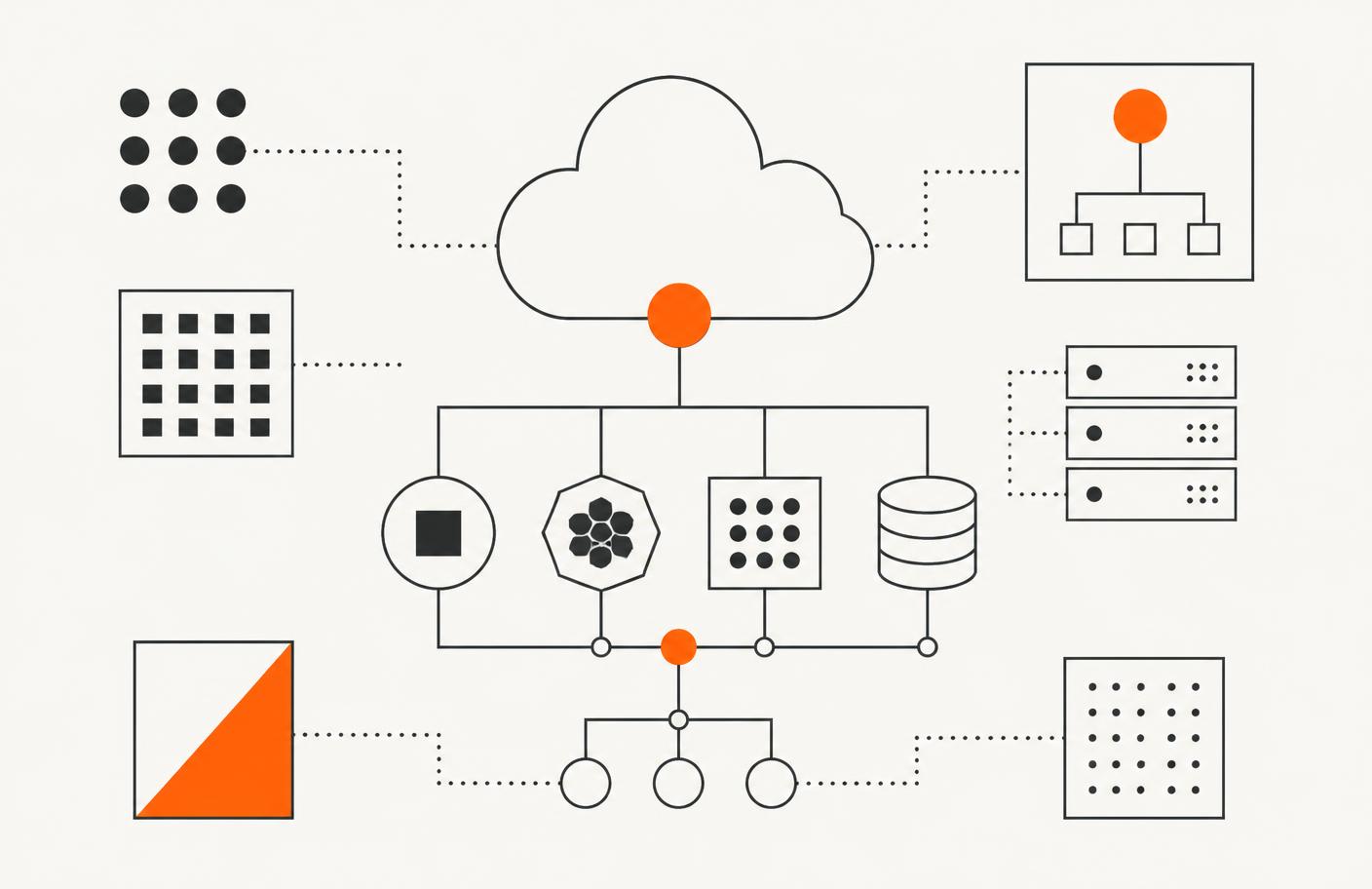
Infrastructure is treated as part of the product. Networks, runtimes, databases and access rules are versioned in the same way as application code, so an environment can be rebuilt from its definition rather than from memory.
- Containerised services and reproducible builds
- Automated pipelines from commit to deployment
- Managed relational and cache layers with backup verification
- Metrics, structured logs and alerting tied to real failure modes

Security and quality
Principles applied while building
Security and quality are properties of how a system is built, not steps added before a release. We apply least-privilege access, validate input at trust boundaries, keep secrets out of source control, and treat dependency updates as regular maintenance.
On the quality side, automated tests cover the behaviour that matters most, every change is reviewed by a second engineer, and defects are traced back to the condition that allowed them rather than patched in place.
Where this work fits
Business scenarios we can support
Product companies
Teams building a software product that needs steady engineering capacity behind it.
Operations-heavy businesses
Organisations running logistics, scheduling or fulfilment on internal tooling.
Professional services
Firms that depend on document workflows, client portals and reporting accuracy.
Digital platforms
Multi-tenant systems where availability, access control and data separation matter.
Established IT estates
Companies maintaining long-lived systems that must keep running while they evolve.
Data-driven teams
Groups that need reliable pipelines, integrations and reporting infrastructure.
Why it matters
Reliable systems are a business condition
When internal software is unreliable, the cost rarely appears as a single incident. It shows up as manual workarounds, duplicated data, slow onboarding and decisions delayed because nobody trusts the numbers.
Dependable technology reverses that. Teams stop compensating for the tools, processes can be automated because the underlying data is consistent, and changes can be released without a rehearsal of everything that might break.
The engineering practices that produce this outcome are unglamorous and consistent: clear ownership, tested code, reproducible environments and honest reporting when something is not working.
Working process
From first conversation to ongoing operation
- 01
Discovery
We map the current systems, constraints, and the outcome the work is meant to produce.
- 02
Architecture
Interfaces, data models and deployment topology are agreed and written down before implementation.
- 03
Iterative delivery
Work ships in reviewable increments so direction can be corrected early rather than late.
- 04
Verification
Automated tests, code review and staged environments confirm behaviour before release.
- 05
Operation
Monitoring, logging and runbooks make production supportable by the people who own it.
- 06
Evolution
Systems are refactored and updated on a schedule instead of only when something breaks.
In summary
beoranged GmbH
An information technology company focused on custom software, cloud infrastructure and system integration. We work in English, document what we build, and treat maintenance as part of engineering rather than an afterthought.
Contact
beoranged GmbH
myrapierce1989@gmail.com
beoranged.com